Features
Part of Score your commuter rail line as a leisure ride with a repeatable 2027 test
Which suburban stops on a regional line actually repay the detour?
Using commuter and regional lines to extend a bigger trip: which suburban stops repay a detour, how to judge a short hop, and closing the last mile.
What to take away
- Regional lines reach places long-distance trains pass through. That is their entire value on a longer trip.
- A stop is worth adding when frequency lets you leave again within an hour of deciding to.
- Judge suburban stops on what is within a fifteen-minute walk, because that is all you will see.
- Bring a way to close the last mile, whether that is a folding bike, a scooter or good shoes.
What regional services add to a bigger trip
A long-distance route gives you a corridor. A regional network gives you a lattice hanging off it. The stops on that lattice are usually ordinary towns and suburbs, which is exactly why they are interesting: river frontages, old main streets, working harbors, and places nobody photographs.
The trade is frequency for glamour. A regional line running every forty minutes lets you get off on impulse, look at something for an hour, and carry on. A long-distance train does not. That is also why a shortlist is built against service frequency rather than scenery.
What makes a suburban stop worth it
Pass
- Frequency
- Something back within an hour
- Walk-out
- Somewhere to go within fifteen minutes
- Shelter
- Somewhere covered to wait
- Interest
- One specific thing you can name
Fail
- Frequency
- One train every three hours
- Walk-out
- A parking lot and an arterial road
- Shelter
- An open platform in November
- Interest
- A vague sense that it looks nice
The fourth test is the one people skip. Name the specific thing before you go, even if it is only a bridge or a bakery. Stops chosen on a feeling produce forty minutes of standing about.
Suburban Stop Worth-It Tests
- Frequencysomething back within an hour
- Walk-outsomewhere to go in fifteen minutes
- Sheltersomewhere covered to wait
- Interestone specific thing you can name
Take something to look through
Regional lines run at a speed where detail is visible, so a small pair of binoculars earns its place: bridges, signal boxes, harbor cranes, birds on an estuary.
TSA lists binoculars as permitted in carry-on and checked bags, so they travel easily even when a flight is part of the wider trip. Eight by twenty-five is plenty, weighs little, and fits in a coat pocket.
Closing the last mile
Many good stops sit a mile or two from what you actually want to see. Walking is usually fine; sometimes it is not.
If you are considering an electric scooter or similar to close the gap, check the rules before assuming. The FAA's entry on portable recreational vehicles powered by lithium ion batteries covers hoverboards, self-balancing scooters and similar devices.
It states plainly that you must contact your airline to see whether it accepts them as carry-on or checked baggage, because many do not. Rail operators set their own rules, often more permissive, but ask first.
Closing the Last Mile
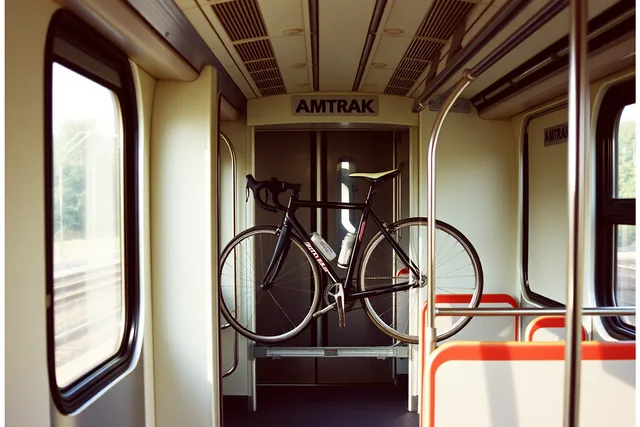
Folding bike
- Distance solved
- 2-5 miles
- Booking needed
- reservation on many trains
Good shoes
- Distance solved
- 1 mile
- Booking needed
- nothing
Local bus
- Distance solved
- the rest
- Booking needed
- weekend timetable must be real
Fitting stops into a longer plan
Add one stop per travel day, not two. Score each candidate with the same sheet used for the services themselves, described in the weekend rail service testing plan. The reasoning is the same as for scenic corridors, worked through in scenic rail stops worth adding to a longer trip, with frequency doing more of the work.