Features
Part of Twelve kinds of rail tour operator, and how to judge each one in 2027
Group tour photography: working within someone else's schedule and etiquette
Group tour photography: shooting on a group trip, working within someone else's schedule, group etiquette, what to carry when the coach waits.
What to take away
- On a group trip the schedule is not yours. Pack and shoot for short, fixed windows.
- One body, one lens, no bag changes. Anything that needs unpacking will not get used.
- Ask the guide where and when photography is welcome. It costs nothing and prevents most friction.
- Drone paperwork is done before you leave, not on the platform. Registration and identification requirements are specific.
Pack for a fixed window
Group photography is a series of ten-minute opportunities announced with little notice. That reality sets the kit. One camera, one zoom, everything else left at the hotel.
- The camera on a strap, ready, not in a bag.
- One spare battery in a pocket, terminals protected.
- A cloth in the other pocket.
- Nothing that requires kneeling on the floor of a coach to reach.
If you shoot on a phone alongside a camera, decide in advance which one is for which situation. Switching between them wastes the window.
Group etiquette
Ask the guide at the start where photography is welcome and where it is not. Most will tell you exactly which stops have a good vantage point and how long the group stops there, which is worth more than any research.
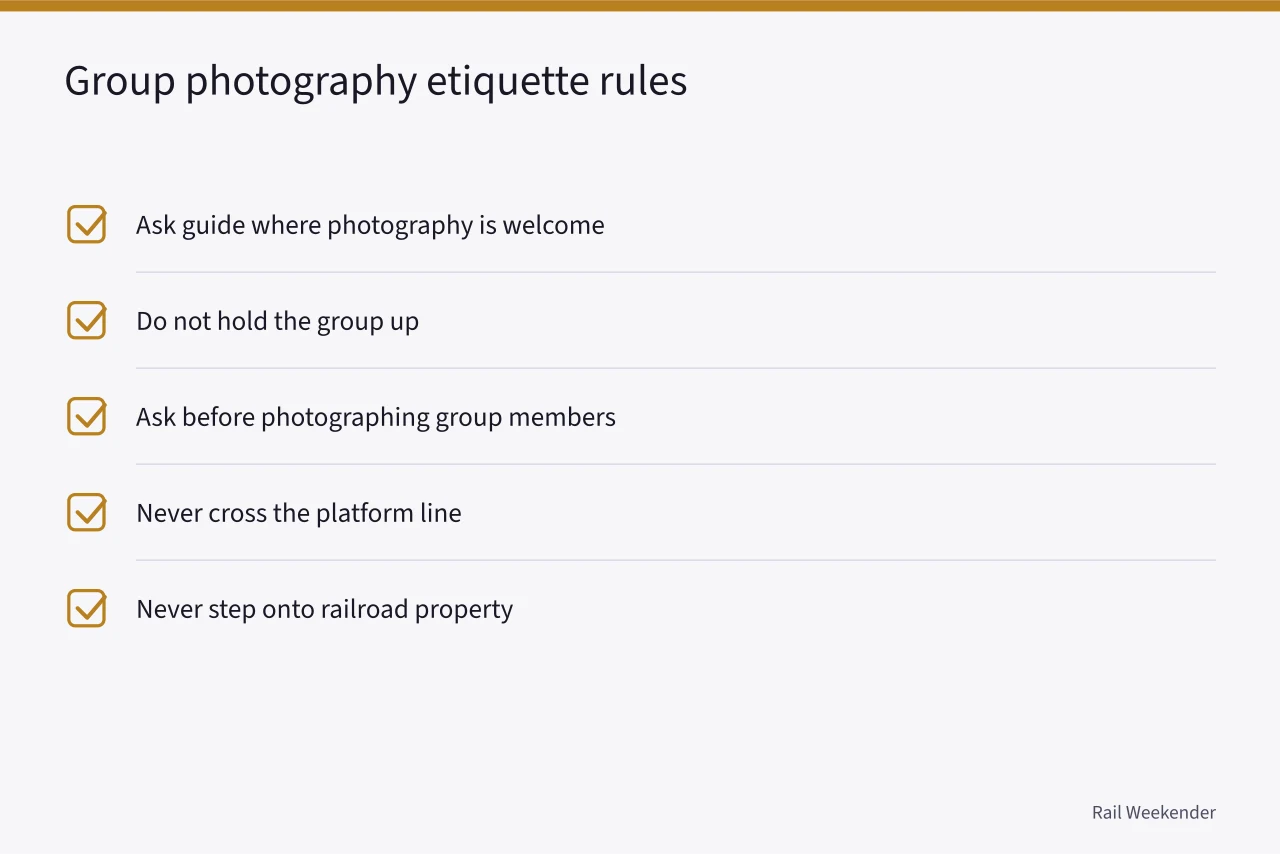
Then keep to three rules. Do not hold the group up. Do not photograph other members of the group without asking. Do not step beyond a platform line or onto railroad property for a better angle, whatever the guide's tolerance appears to be.
Handling the schedule
| Situation | The move |
|---|---|
| Ten-minute photo stop | Shoot the obvious frame first, then look for the second |
| Long ride with good light | Take a window seat early and stay in it |
| Station change with a gap | Ask the guide if leaving the platform is allowed |
| Golden hour on the coach | Accept it, and shoot through the glass properly |
The drone question, settled in advance
If the tour permits a drone at all, paperwork happens at home. The FAA's remote identification requirements split recreational flyers from Part 107 pilots.
Recreational flyers register once and list each standard remote ID drone or broadcast module in inventory. Part 107 pilots register each device separately and receive a unique registration number for each. There is also a process to request a letter of authorization to operate without remote ID in limited circumstances.
Getting the drone there is a separate question. TSA's drones through a checkpoint entry says drones are allowed through the checkpoint.
It directs travelers to check their airline's policy for both carry-on and checked bags, and drones containing lithium batteries, fuel cells or certain parachute components may be prohibited in baggage.
Working with the guide rather than around them
Guides know where the good light falls because they have done the route dozens of times. Tell them on day one that photography is why you came, and most will point you to the right side of the train before you ask.
On an independent trip, that seat costs money rather than a conversation. The one upgrade worth arguing over is what the correct side with a table is worth.
The independent version of this kit and these habits is in a photographer's field list for train weekends.
Whether a given operator will accommodate any of it depends on which of the twelve operator types it belongs to.
Common questions
Is a tripod worth bringing on a group trip? Almost never. There is rarely time to set one up, and it slows the group.
Can I ask for a photography stop? You can ask. Whether it happens depends on the schedule and the operator.
Are enthusiast tours better for photography? Usually much better, because access and light are the product rather than a side effect.
What is the single biggest constraint? Time. Everything else follows from having ten minutes rather than an hour.