Reviews
Score your commuter rail line as a leisure ride with a repeatable 2027 test
Weekend rail services in 2027: a repeatable method for judging your local commuter and regional rail as leisure transport, with the scoring sheet.
What to take away
- This is a method, not a ranking. No services have been tested here, and any that claim to have been should say when and how.
- Weekend timetables are different products from weekday ones. Test the one you will actually use.
- Score six thingsfrequency, span, fares, access, bike policy and the last mile at each end.
- Run one cheap test trip before committing a whole weekend to a service you have never used.
Why a method rather than a list
Commuter and regional rail networks change timetables, fares and weekend patterns often, and there is no national public dataset that rates them for leisure use. A list of the best services would be an opinion with a publication date attached, out of date within a season.
What survives is the scoring sheet. Apply it to whatever runs near you, and the answer stays current because you generated it.
The scoring sheet
| Criterion | What to record | Why it matters |
|---|---|---|
| Weekend frequency | Trains per hour or per day, Saturday and Sunday separately | Decides how much a delay costs |
| Service span | First and last train each day | Decides whether an evening is usable |
| Fares | Weekend price, day passes, group rates | Often cheaper at weekends on commuter lines |
| Access | Step-free stations, staffing hours | Decides who can use it at all |
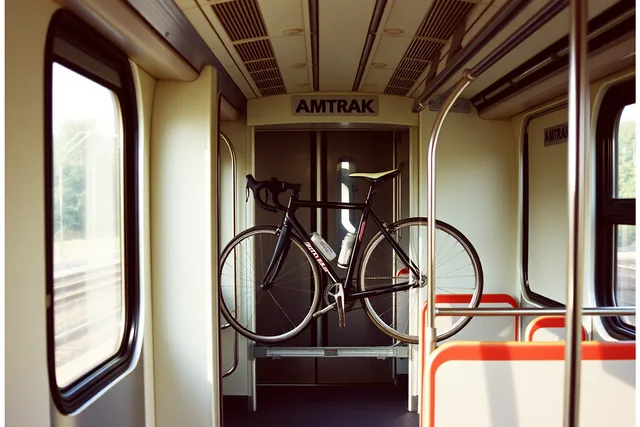
| Bikes | Permitted, reserved, or peak-restricted | Solves the last mile if allowed |
| Last mile | Walking or transit at both ends | The most common failure point |
Score each out of five and write the date. Two services that look identical on a map routinely differ by two points on span alone. A packaged trip takes a different sheet, where movements per day and unstructured hours do the work that frequency does here.
Score Your Rail Line
- Weekend frequencytrains per hour or day
- Service spanfirst and last train
- Faresweekend price, day passes, groups
- Accessstep-free stations, staffing hours
- Bikespermitted, reserved, peak-restricted
- Last milewalking or transit at both ends
Run one cheap test trip
Before planning a full weekend around an unfamiliar service, ride it once for an afternoon. Note the actual boarding process, whether seats are reserved, whether the station is staffed, and how long the walk out of the station takes.
One Cheap Test Trip
- Ride an unfamiliar service once for an afternoon
- Note boarding, seat reservations, station staffing
- Time the walk out of the station
- Check what the journey planner got wrong
- Confirm the train on the operator's own site
- Bring someone who notices different things
Note what the journey planner got wrong, since confirming the train on the operator's own site removes the most common single failure in weekend rail travel.
Take somebody who will notice different things than you do. Traveling with children is a good stress test of any service, and it has its own documented handling.
TSA's guidance on traveling with children says a parent may carry a child through the walk-through metal detector. Officers will not remove a child from a wheelchair or other mobility aid.
Families can call TSA Cares 72 hours before travel with questions.
Do not forget the drive to the station
Many regional services are used from a park-and-ride, which introduces a road cost most people forget to score. Tolls are part of that: TSA lists E-Z Pass transponders as permitted in either bag on a flight. It is a small reminder that the road leg of a rail trip is a real leg with its own equipment and charges.
Score parking cost, availability at weekends, and whether the deck fills before mid-morning.
Publishing what you find
When you write up results, state what you tested, the date, and what you did not test, which separates a review from an assertion.
The same standard applies to any packaged trip you compare, as set out in how to compare organized rail trips. The destination-side version of this scoring approach is in the car-free comparison framework.