Rules
Part of Amtrak weekend travel: plan around train frequency
Accessible rail travel: step-free Amtrak stations and what to ask
Accessible rail travel planning for an Amtrak weekend: step-free stations like Washington Union and Boston South, ADA rules, oxygen and what to ask first.
What to take away
- Accessible rail travel starts with the station, not the train. Boarding method and staffing hours differ between stops on the same route.
- Request assistance when you book, then ask for a confirmation reference and repeat it at check-in.
- For any flight leg, the FAA requires enough battery power for the duration plus airline approval before you fly with a portable oxygen concentrator.
- Book accessible rooms by phone when the website shows none; inventory often sits outside online display.
- Where your plan allows thirty minutes of connection buffer, double it.
The station decides more than the train
A Viewliner or Superliner car says nothing about the platform you will actually stand on. One stop has a raised platform and level boarding. The next uses a portable lift and a staff member on duty only part of the day. Some halts are unstaffed, which changes both boarding and where you wait in bad weather.
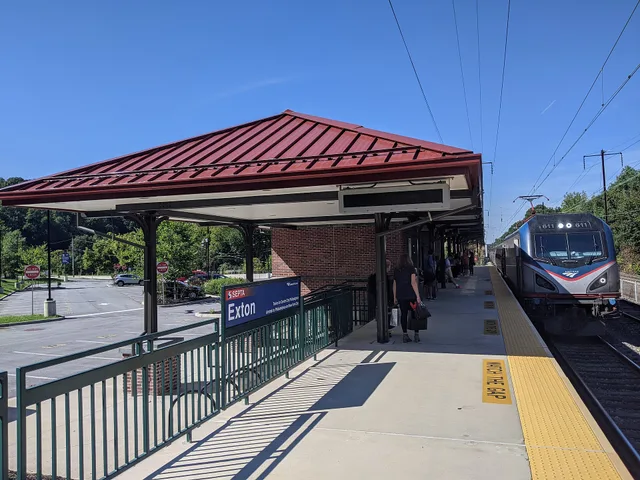
Some stations settle the question by name. Washington Union Station (WAS), Philadelphia 30th Street (PHL), Boston South Station (BOS) and New York Penn Station (NYP) all board from high-level platforms, so the step from platform to car is level and no lift is needed. A weekend pair such as WAS to PHL, or WAS on to NYP, keeps both ends on high platforms and both ends staffed. Amtrak's station pages list the platform and accessibility details for every stop, including the ones that board by lift instead.
Ask four questions about both ends of the trip:
- Is boarding level, or does it use a lift or step?
- Are staff present at your scheduled arrival time?
- Is there a step-free route from platform to street?
- Where is the nearest accessible restroom, and is it inside or outside the barrier?
Write the answers down with the date you received them. Staffing hours change with the season, and a Sunday answer may not hold on a Tuesday.
Ask for assistance early and get it in writing
Assistance is a request until someone confirms it. Make it when you book, not at the station, and ask for a reference number. If a connection is involved, confirm that assistance is arranged for the transfer too, because booking systems do not always pass that along.
None of this depends on goodwill. Amtrak is covered by the Americans with Disabilities Act, and the Department of Transportation rule that carries it into transportation, 49 CFR Part 37, sets what stations and trains must provide. Amtrak's own accessibility policy sits on top of the law, and that policy is the standard your request is measured against.
Make the request through Amtrak's accessibility services when you book, not at the platform. Call 1-800-USA-RAIL (1-800-872-7245) and ask to be connected with accessibility services; if you booked online, call afterward so the request is attached to the reservation. Ask which station supplies the lift, how much notice that station needs, and take the reference number with you.
If a packaged trip does the planning for you, the test is what the operator says about the hardest moment of the itinerary rather than the average day.
The same principle covers any air leg added to a rail weekend. TSA's assistance request form asks you to call instead of filing it when the flight is within 72 hours. It covers the screening checkpoint only.
In-flight help and a wheelchair from curb to aircraft belong to the airline. Rail splits the same way: ask early, and know which organization owns which part of the help.
Medical equipment and what travels with you
Carry documentation for anything powered, and keep it in the bag that stays at your seat. For a trip with a flight, the FAA publishes guidance on portable oxygen concentrators: enough battery power for the flight, and airline approval obtained before travel.
Rail has its own rules, so ask the operator directly rather than carrying the aviation answer across. The same logic sits behind the seat kit for a long ride.
- Medication in original labeled packaging, in the bag that stays with you.
- A written list of equipment, model numbers and battery types.
- Spare batteries protected from short circuit, plus a charger with the right adapter.
- The nearest pharmacy to your lodging, noted before you travel.
Build slack into the plan
Access needs and tight connections do not mix. Take the itinerary with the longer transfer even when a shorter one exists, and prefer a staffed station over an unstaffed one. Where the overall weekend plan allows thirty minutes of buffer, double it.
Accessible rooms and adapted transfers change the arithmetic. Price them against the cost lines for the weekend before booking, not after.
Common questions
Do I have to disclose a disability to travel?
No. You choose what to share. Describing the assistance you want usually gets a better answer than a diagnosis would, and Amtrak's accessibility services can speak to equipment questions directly.
Can I bring my own wheelchair on the train?
Usually, subject to size and weight limits that differ by equipment type. Confirm the dimensions with the operator for your specific train before you book, since limits are set per service.
Are accessible rooms bookable online?
Sometimes only by phone. If the website shows none, call 1-800-USA-RAIL (1-800-872-7245) before concluding they are sold out. Amtrak's accessible bedrooms — the accessible bedroom in a Viewliner car and the one in a Superliner car — and other accessible rooms often sit outside what the booking page displays.
What if the promised assistance does not appear?
Ask for a supervisor at the station and record the time. A written complaint afterwards carries far more weight with a timestamp attached.