Industry
Part of Amtrak weekend travel: plan around train frequency
Where Amtrak weekend travel guides actually come from, and how to vet them
Where station-city rail travel guides and volunteer docents actually come from, what to ask before paying, and which credentials are real.
What to take away
- Most good rail travel guides are local, small and hard to find through a search engine. Ask institutions, not aggregators.
- There is no federal licensing scheme for tour guides, so treat any claim of official standing with care.
- The security training that does exist in rail applies to employees of operators, not to freelance guides.
- Book guides after the train, never before. The timetable decides which slots are possible.
Start with institutions, not listings
Reliable rail travel guides sit where advertising is weak. City and county historical societies — including local chapters of the National Railway Historical Society — often run weekend walks led by people who have read the primary records, and university public history departments run seasonal tours.
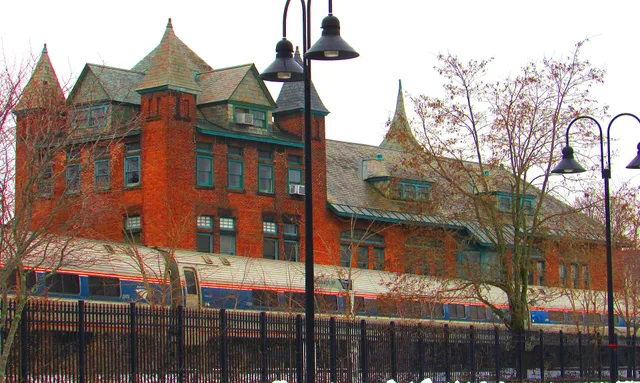
Preservation trusts, rail and transit museums such as the New York Transit Museum in Brooklyn and the California State Railroad Museum in Sacramento, and friends-of-the-station volunteer groups publish tour calendars that never reach a booking platform. They cluster in old transport towns, which is why a stop with grand buildings for its size repays an hour.
Call or email rather than filling in a form. Ask what the walk covers, how long it takes, where it starts relative to the station, and whether it runs in rain. A group that answers those four questions crisply is usually worth the fee.
Where Amtrak itself comes in
The closest thing to an official Amtrak guide is Trails & Rails, a partnership with the National Park Service. NPS volunteers ride specific Amtrak routes and give onboard interpretive programs about the country you are crossing; they are not city guides, and they do not walk you around a station town.
Amtrak Vacations is different: it is a separate travel company that sells rail packages under an Amtrak license, and some itineraries include a guided city walk. That guide is its own contractor rather than Amtrak staff, which is exactly why the questions below matter.
Amtrak's Great American Stations program is built around the local groups that restore and reuse their depots — the historical societies, preservation trusts and friends-of-the-station groups that run weekend walks. Ask the station's own group first; they know who guides in town.
Understand which credentials are real
In the United States, only a handful of cities license guides; New York City is the largest, where the Department of Consumer and Worker Protection issues a sightseeing guide license. There is no federal license, and most states and cities issue none. A guide calling themselves certified usually means a membership body or a training course — the National Association for Interpretation's Certified Interpretive Guide, for instance. That can be good, but it is not a public license.
Ask what the certificate is, who issued it, and what it required. For a packaged trip making the same claim — an Amtrak Vacations itinerary, say — the check is identical: ask which named person holds it.
It helps to know what federal rail involvement looks like, so you neither over-read nor dismiss a claim. TSA's rule on security training for surface transportation employees, published in March 2020, appears in the Code of Federal Regulations at 49 CFR Part 1580.
It applies to owners and operators such as passenger railroads, transit agencies and higher-risk freight railroads. Those companies must train employees in security-sensitive roles and name a security coordinator. It says nothing about a freelance walking guide.
Separately, TSA convenes the Surface Transportation Security Advisory Committee, or STSAC, which advises on policy for these modes. Neither program rates, licenses or endorses tour operators.
Questions worth asking before you pay
Questions before you pay
- How many people are on the walk, and what happens if only two book?
- What is the exact meeting point, and how far is it from the platform?
- Is the route step-free, and where are the seating and restroom stops?
- What are the cancelation terms on both sides, in writing?
- Does the fee include entry to anything, or is that extra?
The written cancelation terms matter more on a rail weekend than a driving one, because a delayed train can make a fixed 10 a.m. start impossible. A guide who offers a same-day reschedule is worth more than one who is ten dollars cheaper.
Fit the guide to the timetable
Book the train first, then look for guiding in the window that survives. A Saturday morning walk is safe. A Friday evening walk depends on a train arriving on time, which is exactly the assumption the rest of your weekend plan should avoid making.
Two guided hours is usually enough. Beyond that, first-time visitors stop absorbing, which is one of the things people miss on an early rail trip. Leave the afternoon unbooked and follow whatever the morning turned up.