Guides
How to plan a two-day Amtrak weekend around the return train
A planning method for a two-day Amtrak weekend: set the purpose, compare corridor frequency with once-daily trains, shortlist from timetables, and book the return first.
What to take away
- Pick the purpose before the route. Rest, scenery, a city break and a heritage ride each point to a different train.
- Frequency decides what a delay costs. Amtrak's route pages show seven Hiawatha round trips a day (six on Sunday), 13 Pacific Surfliner round trips between San Diego and Los Angeles, and one California Zephyr each way daily.
- Fix the return train first, then work backwards. A missed corridor train costs an hour or two. A missed long-distance train costs a day.
- Amtrak's current coach fare families are Flex, Value and Sale. Value forfeits 30 percent if cancelled and Sale forfeits 50 percent. Flex is fully refundable.
- Timetable PDFs do not show temporary changes. Amtrak's Northeast Regional page lists reduced New York to Boston weekend service from 12 September to 1 November 2026.
Facts below were read on Amtrak's own pages on 26 October 2026. Check each one again before you book, because schedules and fares change.
Step one: write the purpose and the return deadline
Write one sentence naming the trip: rest, scenery, a city, or heritage rail. Then write the latest time you can be home on Sunday. That deadline is the planning constraint.
Everything else gets tested against those two lines. A scenic trip needs daylight on the best stretch. A city trip needs a fast corridor and a base near the station. A rest trip needs few changes.
For route choice by season, see the scenic rail weekend guide. This article covers the method that comes before it.
Step two: sort the options by frequency
Corridor trains run several times a day. Long-distance trains usually run once. The difference is the whole risk profile of the weekend. The state-supported versus long-distance guide explains why the two types differ.
| Service | What Amtrak's route page says | What it means for a weekend |
|---|---|---|
| Hiawatha, Chicago to Milwaukee | Seven round trips a day, six on Sunday; about 1 hour 29 minutes | Easy to recover from a miss. Still check the last Sunday train |
| Pacific Surfliner | 13 daily round trips San Diego to Los Angeles; five daily round trips Santa Barbara to San Diego | Good for flexible weekends. The northern section is thinner |
| Northeast Regional | Multiple departures daily; Boston to Washington and beyond | Frequent, but not every train stops everywhere. Read your station's column |
| Downeaster, Boston to Brunswick | Multiple departures daily; the 25 October timetable shows about 3 hours 20 minutes from Boston to Brunswick | Workable, but evening gaps are long |
| Capitol Corridor | Multiple departures daily; listed journey time 3 hours 15 minutes | Corridor rhythm. Pull the timetable for exact times |
| Cascades | Multiple departures daily; Vancouver to Eugene via Seattle and Portland | Pick the section you need, not the whole route |
| California Zephyr | Daily, Chicago to Emeryville | One train each way. A miss costs a day |
Sources for the table are Amtrak's route pages, linked below. Where a page says only "multiple departures daily", the table says so instead of inventing a number.
Step three: shortlist from the timetable, not the brochure
For each candidate, write down four facts from Amtrak's current timetable or schedule search: the outbound train, the arrival time, the Sunday return, and the time you get home. Cut anything that fails your Sunday deadline.
Amtrak says its timetables "do not reflect temporary schedule changes", so also run a schedule search for your exact dates. That matters in autumn 2026. Amtrak's Northeast Regional page lists reduced weekend service between New York and Boston from 12 September to 1 November 2026, adjusted service south of Washington from 16 to 26 October, and Portal North Bridge work affecting Northeast Corridor service from 9 October to 15 November.
If you need a refresher on reading the grid, use the timetable reading guide.
Two more Amtrak rules affect the shortlist. Amtrak advises arriving at least 30 minutes before departure. It also says connections under 60 minutes are not normally guaranteed, or 90 minutes between an arriving long-distance train and a Northeast Corridor local train.
Four worked scenarios
These are planning exercises, not trip reports. The trains and stations are real. The travelers are not.
Family weekend to Mystic, Connecticut. Mystic's Amtrak page shows a station building with a waiting room at 2 Roosevelt Avenue. In the Northeast Regional timetable PDF (generated 22 October 2026) many trains show no stop at Mystic, so do not assume an hourly service from the line name. Read the Mystic row, pick a train that actually stops, and fix the Sunday return before booking a room. Each traveler may bring one personal item and two carry-on bags, and Amtrak lists two free checked bags per traveler plus two more at $20 each, so confirm on the station's Amtrak page whether your station offers checked baggage. Count the bags the family will carry before booking.
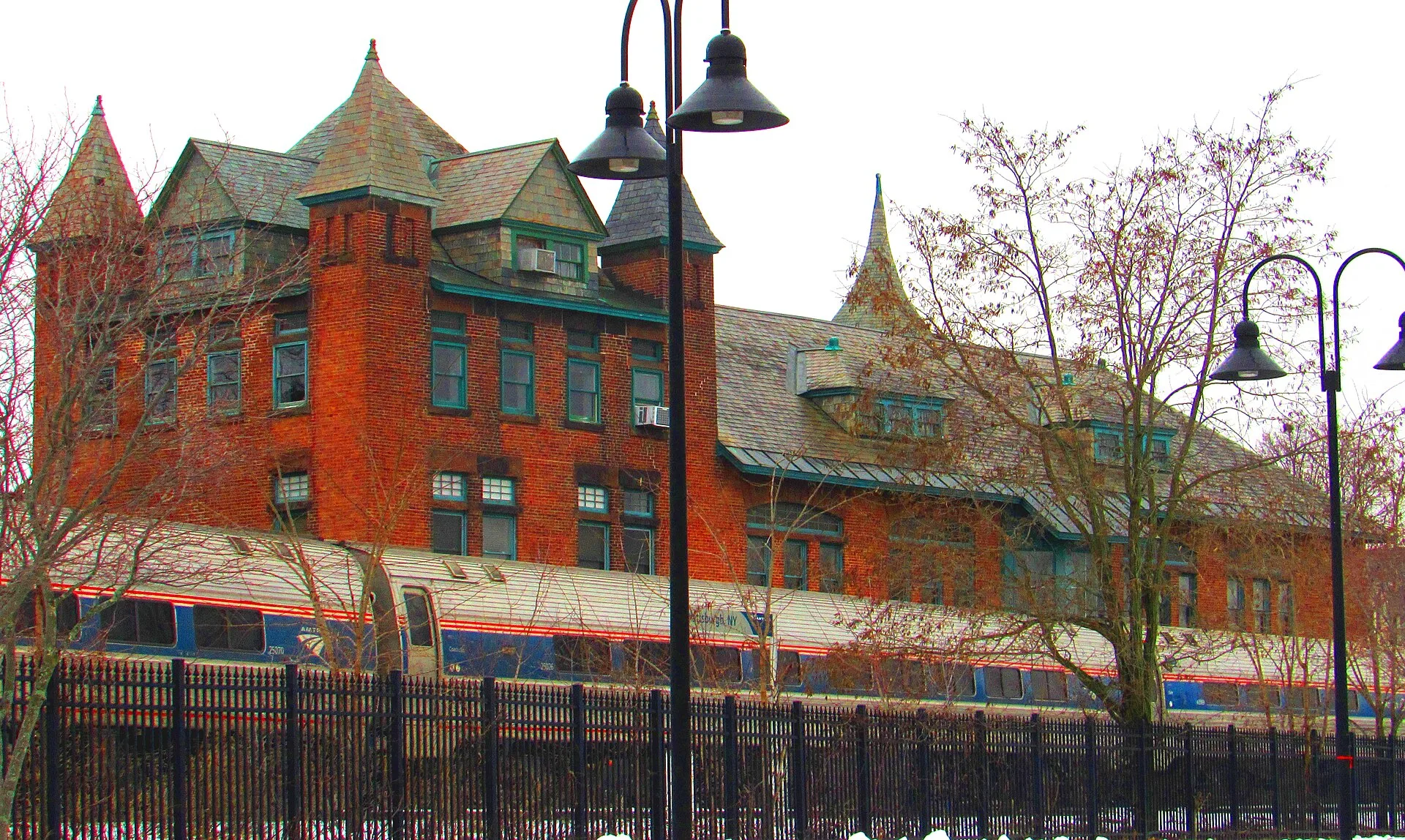
Photographer to Hudson, New York. Hudson is on the Empire Service. Amtrak's page for the station says it is within walking distance of downtown Hudson and that the depot dates from 1874. Amtrak's Empire Service page says preferred seat orientation is not guaranteed, so do not plan a shot list around one window. Choose a train with daylight on the stretch you want, and check the Hudson row for the Sunday return.
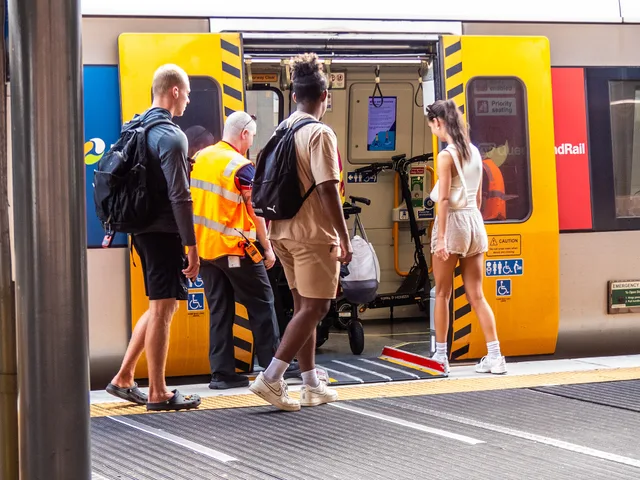
Access-led weekend on the Downeaster. The Downeaster timetable generated on 25 October 2026 shows Saturday and Sunday trains leaving Boston North Station at 8:50 a.m., 11:50 a.m., 3:45 p.m. and 5:20 p.m., among others. Going the other way, the Saturday and Sunday trains leave Portland, Maine, at 5:18 a.m., 7:18 a.m., 11:48 a.m., 1:43 p.m. and 6:33 p.m. That gives a 4 hour 50 minute gap before the last one. Amtrak's accessibility pages say to request help when you book and to arrive at least one hour before departure, so the earlier Sunday train is the safer plan. For detail by station, see the accessible travel guide.
Budget pair on the California Zephyr to Glenwood Springs. The Zephyr timetable generated on 24 October 2026 lists Glenwood Springs at 2:43 p.m. westbound and 11:42 a.m. eastbound, daily. A Friday arrival and a Sunday departure on those times leaves about 45 hours on the ground. From Denver, the same timetable shows westbound at 8:46 a.m. and the Sunday eastbound back into Denver at 6:59 p.m. The timetable shows one train each way, so a missed Sunday train is a 24-hour problem. Price that risk against the fare you choose.
Book the weekend in the right order
- Check the Sunday return and book it first if the fare will sell out.
- Book the outbound train.
- Book the room, matching its cancellation deadline to the train fare. The hotel checklist covers that.
Amtrak allows reservations up to 11 months ahead (see the booking timing guide) and says fares are generally higher in holiday and peak periods. Reserved fares paid by card can be cancelled for a full refund within 24 hours of purchase, if the train has not left.
Fare families matter more than the headline price. Per Amtrak's refund policy, Flex fares are fully refundable and changeable, Value fares cannot be changed and forfeit 30 percent if cancelled before departure, and Sale fares cannot be changed and forfeit 50 percent. Private rooms follow a separate schedule: a full refund 121 or more days ahead, then 75 percent back from 120 to 15 days out. Older guides still mention a Saver fare, but it does not appear in Amtrak's current guide to fares. The booking mistakes article covers the rest of the fare traps.
Carry photo ID. Amtrak asks customers 18 and older to show valid photo ID when they exchange or refund tickets, store or check baggage, or if asked onboard by crew or police. An Amtrak ID page also says staffed stations and kiosk stations expect tickets to be bought before boarding.
Editorial suggestion: when two candidates tie, take the one with more Sunday departures. The cost is a slightly less interesting route. The gain is a cheaper mistake.
Sources
- [Amtrak
- Pacific Surfliner](https://www.amtrak.com/pacific-surfliner-train)
- [Amtrak
- Hiawatha Service](https://www.amtrak.com/hiawatha-train)
- [Amtrak
- Northeast Regional](https://www.amtrak.com/northeast-regional-train)
- [Amtrak
- Downeaster](https://www.amtrak.com/downeaster-train)
- [Amtrak
- California Zephyr](https://www.amtrak.com/california-zephyr-train)
- [Amtrak
- Empire Service](https://www.amtrak.com/empire-service-train)
- [Amtrak
- Cascades](https://www.amtrak.com/cascades-train)
- [Amtrak
- Capitol Corridor](https://www.amtrak.com/capitol-corridor-train)
- [Amtrak
- Guide to fares](https://www.amtrak.com/planning-booking/tickets-reservations/guide-to-fares)
- Amtrak
- Refund and cancellation policy
- Amtrak
- Passenger identification
- Amtrak
- Schedules and timetables
- Amtrak
- At the station
- Amtrak
- Baggage policy
- Amtrak
- Mystic, CT station
- Amtrak
- Hudson, NY station
- Amtrak
- Glenwood Springs, CO station
- Amtrak
- Making reservations for customers with a disability
In this guide
- Accessible Amtrak travel: what to confirm before a weekend tripWhat a traveler with a disability should confirm before an Amtrak weekend: assistance requests, station boarding, mobility device limits, oxygen, companion fares and the legal basis.
- Two day rail itinerary: a Washington weekend from New York by AmtrakA two day rail itinerary for a Washington, D.C. weekend by Amtrak from New York: Saturday on the National Mall, Sunday on Capitol Hill, train choices, lodging areas, getting around and the return plan.