Guides
Part of Score your commuter rail line as a leisure ride with a repeatable 2027 test
Building an unhurried weekend around a thin regional timetable
Building an unhurried weekend on a thin timetable: reading the gaps, choosing the earlier train, waiting comfortably, and traveling with people who need time.
What to take away
- On a thin timetable, the gap between trains is the unit of planning. Work in gaps, not in hours.
- Always take the earlier train. The cost is twenty minutes; the alternative cost is two hours.
- Plan the wait rather than resenting it. A good waiting spot is a planning decision.
- Traveling with small children or anyone who needs time changes every interval, not just one.
Read the gaps, not the times
Print the weekend timetable and look at the gaps between departures rather than at the departures themselves. If trains run every forty minutes, your planning unit is forty minutes and anything you do has to fit inside a multiple of it.
If they run every three hours, you have three decisions to make all weekend and each one is expensive.
Planning unit by gap
Every 40 minutes
- Planning unit
- 40 minutes
- Decisions per weekend
- Many
- Cost of each decision
- Moderate
- Activity fit
- Multiple of 40 min
Every 3 hours
- Planning unit
- 3 hours
- Decisions per weekend
- Three
- Cost of each decision
- Expensive
- Activity fit
- One per gap
That reframing removes most rushing. You stop trying to squeeze an activity into fifty minutes and start choosing between one gap and two.
A corridor worked through
Take Amtrak's Hiawatha Service, Chicago to Milwaukee. On a typical weekday it runs about seven round trips, with midday departures roughly two hours apart and a ninety-minute ride.
A Saturday gives you two blocks of time in Milwaukee. A two-hour gap fits a museum and lunch. A four-hour gap across midday fits an afternoon and dinner, but it costs the last useful train home.
Two other corridors shift the plan. The Downeaster, Boston to Portland, runs about five round trips a day with a midday gap of roughly three hours, so the day holds one anchor and one long meal. The Capitol Corridor in California runs close to hourly, so the same day takes three or four short stops.
This guide covers U.S. rail; Canadian corridors work the same way.
Always take the earlier train
On an infrequent service the asymmetry is stark. Arriving twenty minutes early costs twenty minutes. Missing a departure costs the whole gap, and on a Sunday evening it can cost the night.
Typical U.S. figures for the fallback: a late-evening taxi of twenty miles runs roughly $45 to $75, and a same-night mid-range hotel room typically costs $120 to $200.
Buffer by gap size
Gap
- 15–20 minutes
- Trivial
- 40–60 minutes
- An activity
- Two hours or more
- Half a day
Cost of missing one
- 15–20 minutes
- Five minutes
- 40–60 minutes
- Fifteen minutes
- Two hours or more
- Thirty minutes + fallback
Sensible buffer
- 15–20 minutes
- 40–60 minutes
- Two hours or more
Plan the wait
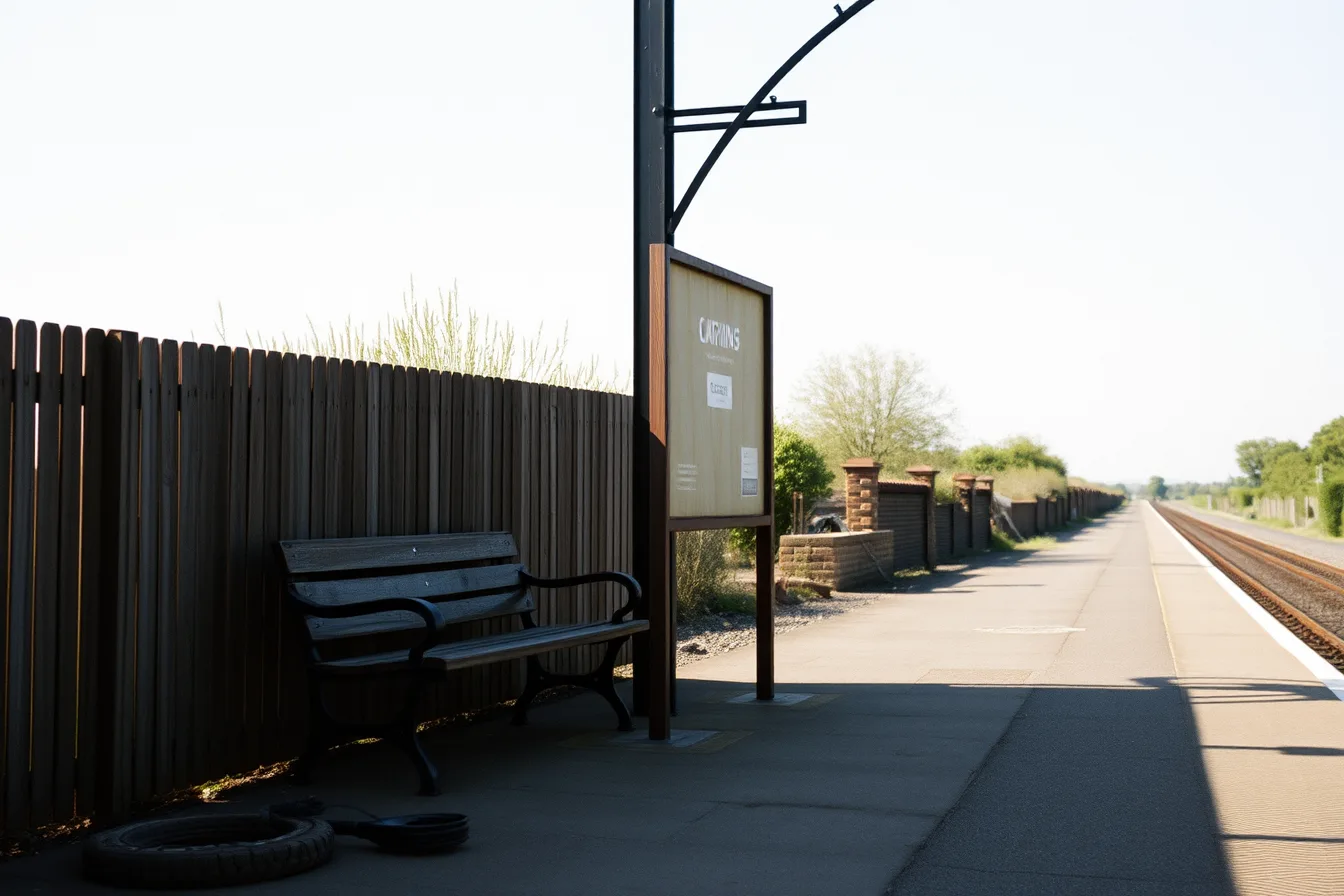
On a thin timetable, waiting is part of the product, so pick where to wait: a cafe two minutes from the platform beats an open shelter.
A station with a bench and a roof beats a halt with neither.
Check before you go, not in the rain. Choosing where to break a journey on those grounds uses the same test as stops worth adding to a longer trip.
Bring a small comfort kit. Something to read, something to drink, and something to clean your hands with, since regional stations rarely have much. On U.S. flights the TSA permits disinfecting wipes; that is air security, not rail.
Most regional trains have overhead racks and no checked-bag counter, so you carry what you bring.
Traveling with people who need time
Every interval gets longer with a small child, an older relative or anyone with mobility needs. Not one interval: all of them. Boarding, the walk out of the station, the trip to the restroom, the decision about lunch.
Feeding an infant fits badly into a forty-minute gap and needs its own allowance. On U.S. flights the TSA permits formula and breast milk in quantities greater than 3.4 ounces as medically necessary liquids.
Regional trains rarely sell food beyond a vending machine, so a bottle and a snack go in the bag. Build the time in for it.
The planning sequence
- Print the timetable for the day you travel.
- Mark every gap of an hour or more.
- Take the earlier train where a miss costs an hour.
- Pick the wait spot for each gap.
- Write the last train at the top of the page.
That is the whole method, same discipline applied to scenic routes in how to plan without rushing the trip. It suits services whose timetable is the binding constraint. Score a candidate on three numbers: round trips on your travel day, the longest gap, and the last departure.
Six round trips with a two-hour gap beats four with a four-hour gap. Compare services that way using the testing plan.