Guides
Amtrak roomette vs bedroom: Space, privacy and service
Amtrak roomette vs bedroom compares space, privacy, bathrooms and shared sleeper-car services to help you choose a room for an overnight train trip.
What to take away
- A roomette is two facing seats that fold into two bunks. A bedroom adds a sofa, an armchair and roughly twice the floor area.
- One traveler, one overnightthe roomette is a compact choice. Two travelers, or two nights: the bedroom offers more space.
- Both rooms include the same meals, the same car attendant and the same station lounge access.
- The real question is how much waking time you plan to spend inside the room.
- Weekend sleepers fill first, so the choice may be made for you.
What actually differs between the two rooms
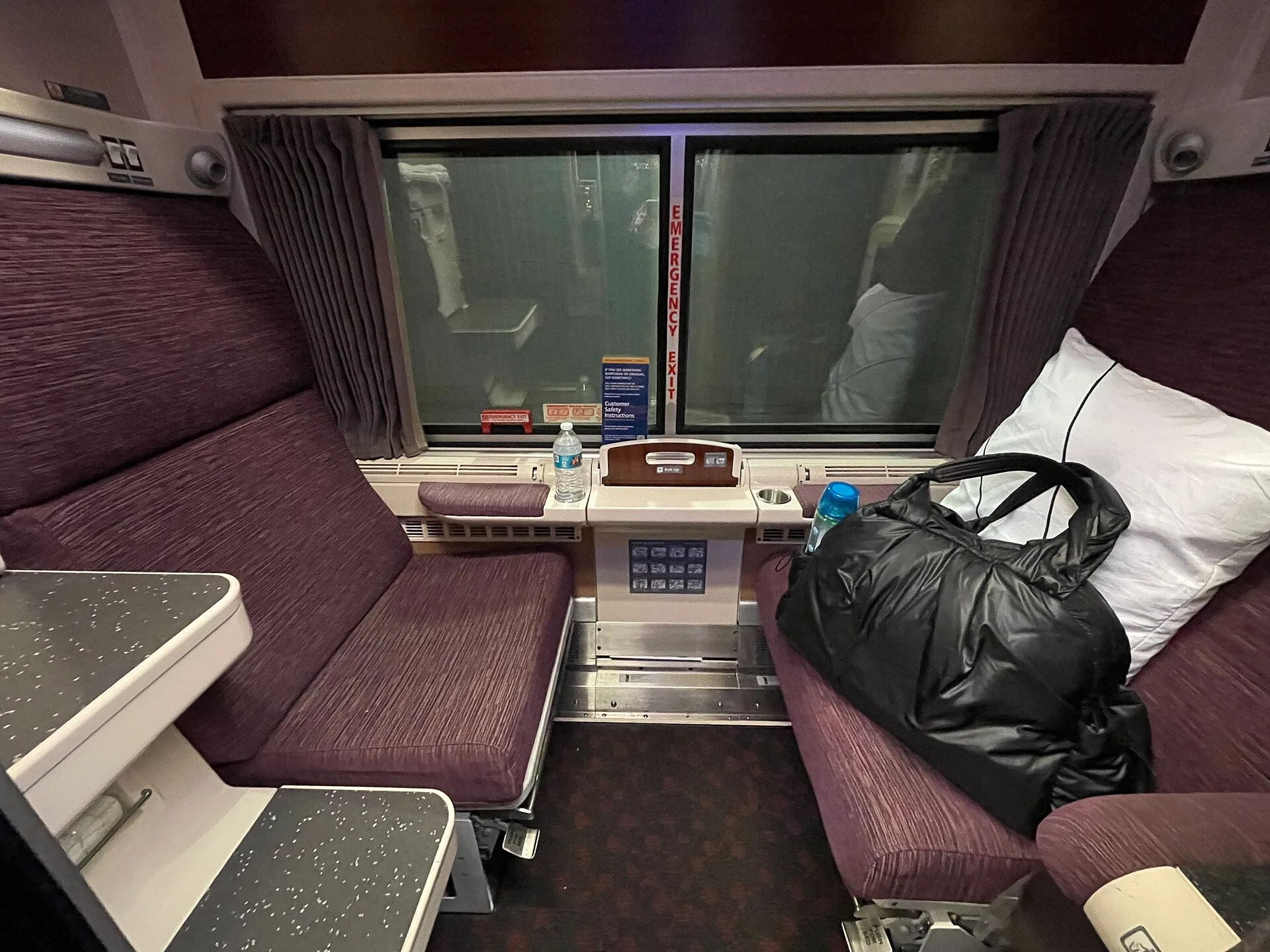
Space is the difference you feel by the second morning. A roomette is two seats facing each other with a small table between them, plus a bed that folds down from the wall at night. Once both berths are down, there is no floor left. Two adults sit close enough to touch knees all evening.
Roomette vs Bedroom
Roomette
- Seating
- Two facing seats
- Floor space
- None when beds down
- Lower berth
- Narrower bunk
- Upper berth
- Fold-down step
- Bathroom
- Shared, or in-room
Bedroom
- Seating
- Sofa plus armchair
- Floor space
- Enough to stand
- Lower berth
- Wider berth
- Upper berth
- Short ladder
- Bathroom
- Toilet and shower inside
A bedroom is built around a sofa and a separate armchair, with enough floor to stand, dress and turn around. The lower berth is wider than a roomette bunk, and the upper berth is reached by a short ladder instead of a fold-down step. On a two-night trip that space stops being a luxury and becomes the point.
Amtrak's sleeper cars come in two layouts: double-deck Superliners and single-level Viewliners.
Bathrooms separate the classes more than size does. Bedrooms have a toilet and shower inside the room.
Superliner roomettes use shared toilets and a shared shower at the end of the car, while some Viewliner roomettes put a toilet in the room itself, handy alone and awkward with company. The car layout can matter as much as the room category when privacy and nighttime convenience are priorities.
What actually differs
Roomette
- Floor area
- Two seats and a fold-out table
- Beds
- Two bunks, upper folds down
- Bathroom
- Shared down the car, or in-room on some Viewliner cars
- Shower
- Shared at the end of the car
- Daytime use
- Sit, read or lie down
- Luggage
- One bag within reach
- Best for
- One traveler, one night
Bedroom
- Floor area
- Sofa, armchair and standing room
- Beds
- Two bunks, wider lower berth
- Bathroom
- Private, inside the room
- Shower
- Private in most bedrooms
- Daytime use
- Sit, eat or work at a table
- Luggage
- Space for a second bag
- Best for
- Two travelers, or two nights
Room choice cannot rescue a weekend that was planned badly. Beginners keep repeating the same rail weekend mistakes long after they pick a sleeper, from booking the last train home to leaving the arrival morning empty.
Where each room is the right answer
The roomette is the right answer for a solo traveler on one overnight, especially someone who plans to spend daylight in the Sightseer Lounge or the cafe car. It is also right when you do not need extra room, since both options include the same meals and the roomette has a flat bed.
Which room fits you
Solo traveler, one overnight?
Roomette
Two travelers or two nights?
The bedroom suits two travelers who want to sit apart, anyone staying two nights, and afternoon nappers. It also suits anyone who values a private toilet. Walking down a moving car at 3 a.m. is not for everyone.
Travelers with mobility limits should check the accessible travel mistakes before boarding. Then compare which room layout best fits their needs.
What both rooms share
Both classes include dining car meals, a sleeping car attendant, bottled water and station lounge access where one exists. Towels, turndown service and coffee at the end of the car come with either room.
The limitation both share is that neither one buys a better schedule. The two rooms sit on the same tracks behind the same freight, and both have thin walls. A bedroom gives you privacy from other passengers, not from the train itself.
Choosing between two close calls
- Count the nights. One overnight favors the roomette. Two or more favor the bedroom.
- Count the people. Two adults who want to sit apart at dinner need the bedroom.
- Check the car type. On a Superliner train, a roomette means a walk to the toilet in the middle of the night.
- Consider how much space you want while awake. The bedroom gives you more room to sit, stand and dress.
- Book early. Sleeper space on Friday and Sunday departures goes first.
Choose the bedroom for more space and a private toilet. Choose a roomette if you want a compact room for a single overnight.
Fares move with demand, so room prices can differ by date and holiday weekend. Compare the total for your dates with how much extra space and privacy the bedroom gives you. The fare errors and travel mistakes that quietly add cost are worth a look before you commit.