Guides
Toronto and Montreal by Train: A Weekend Rail Trip for US Travelers
How a US traveler can ride VIA Rail between Toronto and Montreal, link it to Amtrak's Maple Leaf and Adirondack, and handle the ID and station details for a weekend.
What to take away
- VIA Rail's Toronto to Montréal route covers 538 km in an average of 5 hours 13 minutes, with 40 departures per week listed on its route page. The trip is within Canada, so no border is crossed between the two cities.
- Amtrak's Maple Leaf links New York with Toronto in 12 hours 30 minutes, crossing the border at Niagara Falls. Amtrak's Adirondack links New York with Montréal in about 10 hours.
- The route page lists Economy, Business and Sleeper Plus on this corridor. Economy and Economy Plus differ in change and refund terms, so read the fare conditions before booking.
- US citizens entering Canada are advised to carry a passport. Returning to the US by land, accepted documents include a passport, passport card, enhanced driver's license or a Trusted Traveler card.
- Stations are in the city centre, and both have checkroom services, which suits a weekend with a hotel check-in gap.
This is a planning guide based on the operators' and governments' own pages. Schedules, fares and border rules change, so confirm the day's timetable and your documents before you travel.
The core leg: Toronto to Montréal on VIA Rail
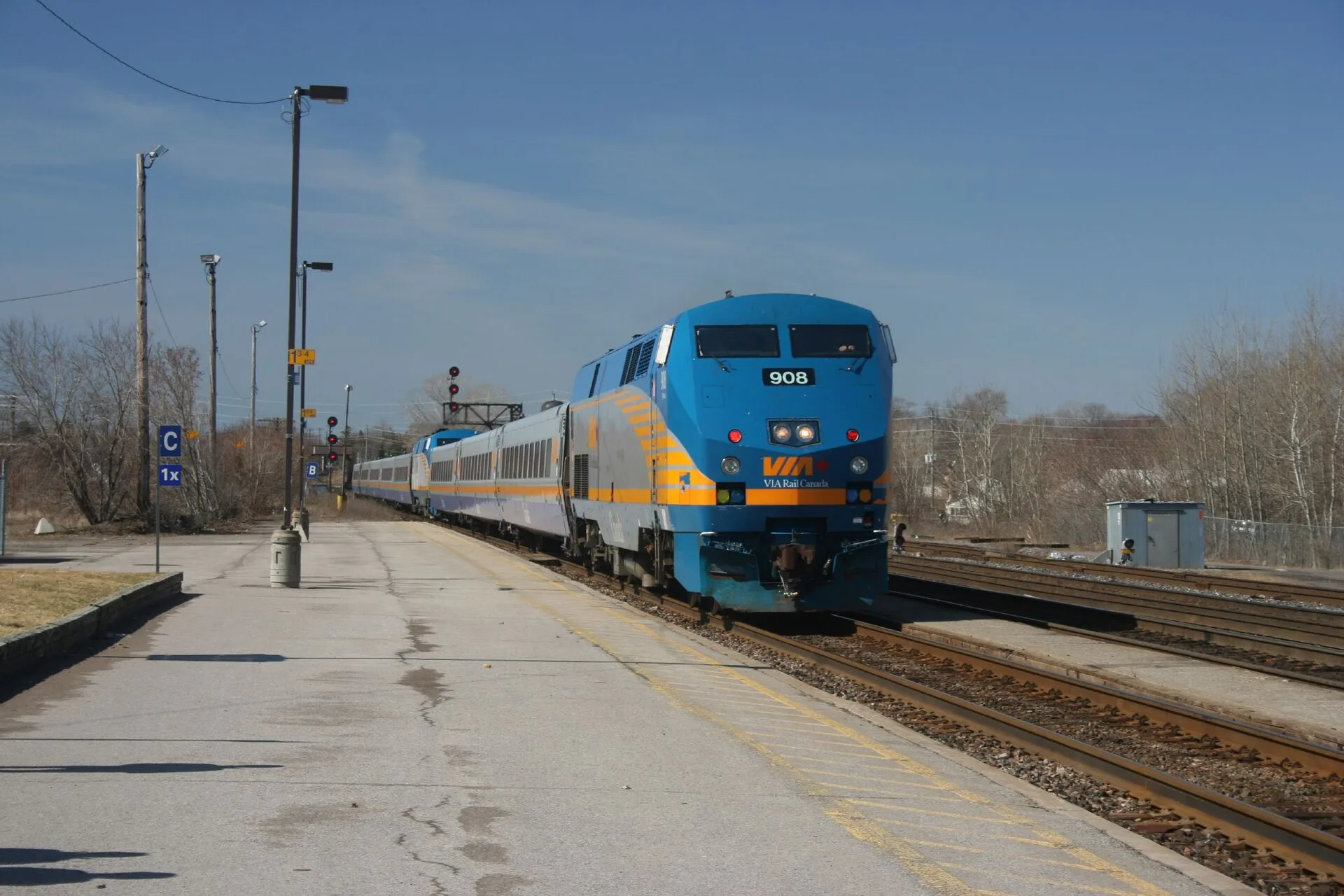
The Toronto to Montréal run is the backbone of the weekend. VIA Rail's route page lists the distance as 538 km and the average duration as 5 hours 13 minutes. The listed trains on its sample date ran from 4 hours 56 minutes to 5 hours 28 minutes, so the journey time depends on which train you pick. The page lists 40 departures per week, and the departure times on its sample day ranged from early morning to the evening.
The route page does not publish a fare table in the text available, and it states that one-way fares exclude sales taxes and vary by day of the week and departure time. Check the booking page for the day you want. For general planning on how fares move with the calendar, see the site's train weekend price guide.
On this corridor VIA lists Economy, Business and Sleeper Plus on the route page. The fare comparison page for Corridor trains sets out how Economy, Economy Plus, Business and Business Plus differ. Among the points listed, Economy changes carry a fee of 25 percent of the fare (minimum $20 per segment) plus any fare difference, while Economy Plus changes carry no service charge, only the fare difference. For refunds before departure, Economy carries a partial refund with a 25 percent fee and Economy Plus a full refund. An extra carry-on item costs $20 plus tax per direction in Economy and is free in Business. Because the page does not map every row cleanly to each class, confirm the details at checkout.
Stations: where you arrive and what they offer
Both stations are central, which is the main reason this weekend works without a car.
Toronto Union Station is at 65 Front Street West, between Bay and York Streets, across from the Royal York Hotel. VIA lists the station as open daily from 05:30 to 00:45, with the ticket counter open 06:00 to 20:00 and Amtrak tickets sold between 07:20 and 13:00 only. Its checkroom runs 07:30 to 19:45 and is listed as free for Business, Sleeper and Prestige passengers and $6 per bag for Economy. Connections include the TTC, GO Transit and the UP Express.
Montréal Central Station is at 895 de la Gauchetière West, under the Queen Elizabeth Hotel and near the Bonaventure and McGill metro stations. VIA lists the station as open Monday to Saturday from 05:30 to 23:00 and Sunday from 07:30 to 23:00. Amtrak tickets are sold daily between 07:00 and 17:00, only by credit card, and a valid passport is required. The checkroom and baggage registration service runs Monday to Thursday 06:00 to 19:00 and Friday to Sunday 07:30 to 19:00. The station has no baggage carts, so pack accordingly.
If you need assistance, both stations list wheelchair-accessible entrances and platforms, and VIA asks for at least 48 hours' notice for curbside assistance at both. Our guide to accessible options for Amtrak weekend travel covers the US side of that planning.
Getting to Canada by Amtrak
A US traveler has two Amtrak routes that end in the cities you want.
Maple Leaf (New York to Toronto). Amtrak's page describes a daily departure from New York to Toronto via Albany and Niagara Falls, crossing the US/Canadian border at Niagara Falls. Travel time is 12 hours 30 minutes. Its station list includes New York Penn Station, Buffalo, Niagara Falls on both sides of the border, Oakville and Toronto Union Station. On the Canadian portion, café purchases accept only credit cards, prepaid credit cards and VIA Rail gift cards. Amtrak's page was carrying a notice of service adjustments for October 23 to 25, 2026 at the time it was read, so check alerts for any date near then.
Adirondack (New York to Montréal). The route runs from New York City's Moynihan Train Hall through the Hudson Valley, Albany and Saratoga Springs, with stops that include Plattsburgh and Rouses Point before St-Lambert and Montréal's Gare Centrale. Travel time is about 10 hours, leaving New York in the morning and arriving in Montréal in the evening.
Neither Amtrak page describes the customs or border procedure, so check Amtrak and the border agencies before you rely on a connection. For a comparison with another cross-border train, read how the Cascades handles the border at Vancouver.
A sample weekend shape
A rail loop for a US traveler can use all three trains:
- Take the Maple Leaf from New York to Toronto, arriving at Toronto Union Station.
- Spend your time in Toronto, then ride VIA Rail to Montréal in the morning or afternoon of day two.
- Spend your time in Montréal, then take the Adirondack back to New York.
With a 12 hour 30 minute leg out, about five hours across the corridor and about 10 hours back, this is a long weekend more than a two-day trip. If the schedule is tighter, ride one Amtrak leg and the VIA corridor, and take another way home. The Amtrak timetable reading guide helps you check connections, and the budget breakdown for train weekends shows how to price a plan like this.
Border notes for US travelers
The sources below describe documents, not train-specific procedures, so treat them as the baseline and confirm the rest with the carrier.
Entering Canada. Immigration, Refugees and Citizenship Canada says US citizens are recommended to always travel with a valid passport. If a US citizen does not have one and is not travelling by air, identity documents showing full name, date of birth and citizenship may be presented, and several documents can be combined if no single one shows all three. A US lawful permanent resident arriving directly from the US by land or water is covered by a green card, and does not need a passport. Montréal's Amtrak counter separately requires a valid passport for ticket sales.
Returning to the US. US Customs and Border Protection lists four documents for US citizens entering by land or sea from Canada: a US passport, a passport card, an enhanced driver's license, or a Trusted Traveler Program card (NEXUS, SENTRI or FAST). The page does not mention trains, so it does not say whether a rail entry counts as land entry. Take a passport book and avoid the question.
For anything you carry across, such as gifts or alcohol, read CBP's customs pages before you pack. The pages reviewed here did not give exemption amounts, so look up current figures before you buy.
A short checklist
- Book the VIA corridor leg for the day and class you want, and read the change and refund terms.
- Check Amtrak's service alerts for your travel dates.
- Carry a passport, and keep it in the same pocket as your tickets.
- Plan station arrivals around checkroom and counter hours.
- Keep payment cards that work in Canada for onboard purchases on the Canadian portion of the Maple Leaf.